Upper Dolpo Trekking Nepal
3 650,00 €
Once a forbidden land, Dolpo retains its pristine conditions and the people unchanged through the centuries. The region became known to the outside world after the release of the film “Caravan” by Eric Valli, which highlighted its spectacular landscapes and the Tibetan culture of the local inhabitants.
In the footsteps of the salt caravans: Saldang, Yangsher, Shey Gompa
Dolpo is a Bae Yul, a “Hidden Country” in Tibetan, due to its inaccessibility and isolation.
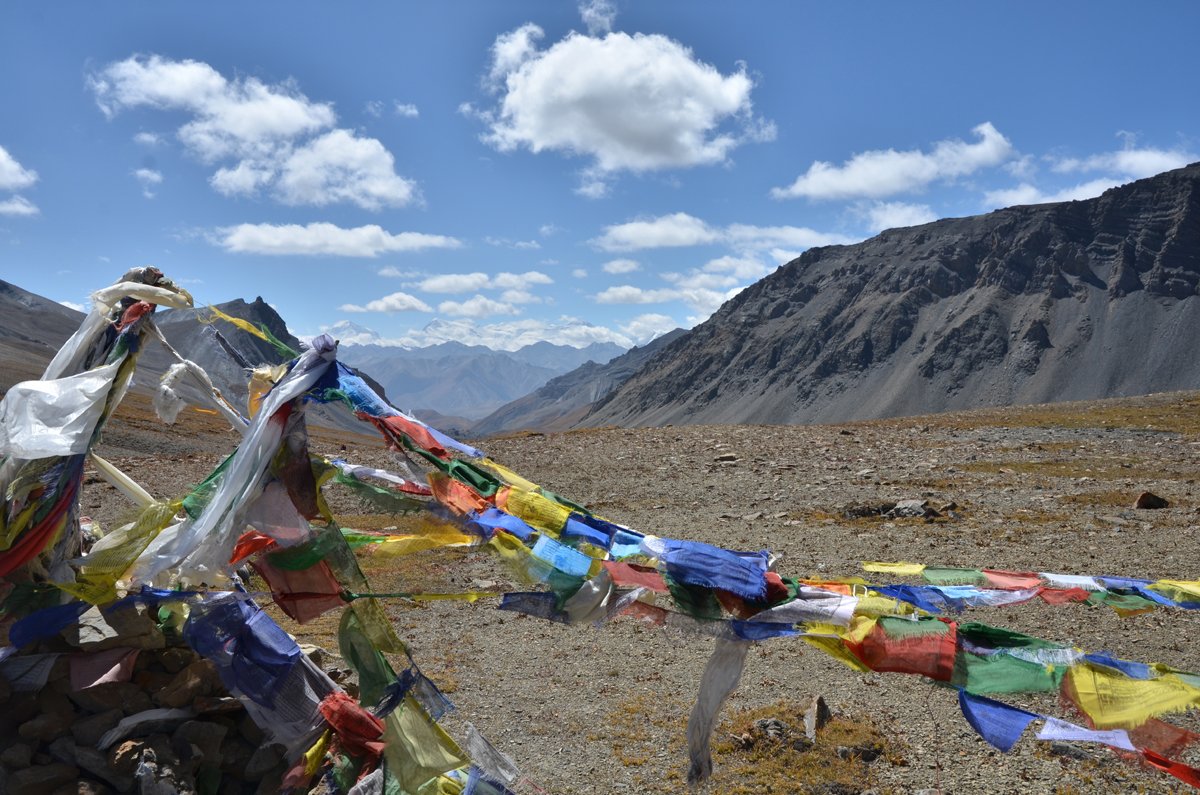
These mystical high valleys were long forbidden to foreigners. Apart from a few villages and monasteries, Dolpo is a desolate land of icy valleys, snow-capped peaks, and pristine, turquoise lakes.
We will visit the main villages of Shey Gompa, “crystal mountain monastery,” whose pilgrims perform the kora and on to Saldang, the small capital of the largest and yet least inhabited districts of Nepal.
We hike through the Tarap Valley with its rich pastures, famous for its small horses and the magnificent Phoksumdo Lake where Eric Valli filmed “Caravan”, which features a caravan passing through the old trade route. Today, it has given way to the Yarsagumba route, a precious little caterpillar turned into a parasite by a fungus, which is the region’s new source of wealth.
- Nepal Country
- Hiking and trekking Thématique
- Easy Difficulté
- 27 days Duration
- 21 days Hiking days
- 5 500 m Max. altitude
- Yes Guide
- Kathmandu Departure / Arrival
Itinerary
Airport pick-up, transfer to hotel.
Domestic flight from Kathmandu to Nepalgunj, a Terai town on the Indian border and gateway to western Nepal. Night in a hotel.
Early flight from Nepalgunj to Juphal, then the trek begins: descent to Dunai, the district headquarters of Dolpo, and a walk along the Thuli Bheri river to the first camp at Singri (2,500 m).
We make a gradual ascent through pine and juniper forest and come across many hamlets and grazing herds. We then camp by the riverside.
We walk through a narrow path in the Tarap Khola gorges and camp near the river.
We leave the gorges and reach the Tibetan plateau at about 4000 m. Actually, Tarap is the name of the valley where there are many villages, of which Dho is the prominent one.
This is a day of rest for acclimatization with visits to small temples, monasteries and villages in the Tarap Valley.
We spend the morning in Tarap, then make a short trek to reach the camp at the foot of the Num La (Pass) that we will cross the next day.
We walk for 2 hr and cross the Num La (5,200m) then walk to Langmosi La (4,900m), another pass. Towards the south, we see the beautiful panoramic view of the Himalayas and the Tibetan Plateau towards the North.
We cross the Langmosi La (Pass) (4,900m) and descend to Nyalde to set up camp near the river.
This day we have an easy hike along the river to reach the village of Sibu.
Today we hike to reach Saldang, Dolpo’s largest village.
A day of rest at Saldang.
We follow the banks of a stream and enjoy an easy walk to Yangshe. We set up camp near the Yangsher Monastery, the largest gompa in Dolpo.
Today we have an easy trek to Karang, a beautiful village within stone walls with barley fields around the village.
It’s a hard trek to cross the Yang La pass (5,400m) and reach the village of Phyger.
We visit the Samling Monastery (follows the ancient Bönpo religion) and trek along the riverbed to Tra, among the nomad camps.
We first follow the riverbed, then climb up and then come down to reach Shey Gompa, Dolpo’s famous monastery. In front of the village lies a hill known as ‘Crystal Mountain’ that is renowned for Kora.
Visit the Shey Gompa and spend the day resting in the camp.
From Shey Gompa, we hike for a few hours before crossing the Kang La (5,500m), the highest pass on this journey. We then make a long descent into a rough terrain to reach Phoksumdo Khola and our bivouac.
This is perhaps the most beautiful day of our trek as we follow the small trail along the sparkling Lake Phoksumdo in an amazing environment of snowy mountains and forests. We camp out in Ringmo.
We spend the morning in Ringmo to visit the Bönpo monastery over the lake. In the afternoon, we take a walk to Sepka. This is our last night in camp.
We make a long trek to reach Juphal Airport.
We fly from Juphal to Nepalgunj and then on to Kathmandu. The rest of the day is free in Kathmandu.
Free day in the city.
Free day in the city.
Airport transfer to TIA (Kathmandu Airport) for your return flight. End of our services.
Practical Info
– In Kathmandu, we use hotels of good category *** well located in the centre of Kathmandu. – The stay in Kathmandu is always done in a B&B to give you your choice of restaurants that offer traditional and continental cuisine according to your choices. – During the trek, you will be on full board and accommodation according to the itinerary.
What is included
- All airport transfers by private vehicle.
- 4 nights at the hotel Tibet *** or similar in Bed & Breakfast
- 1 night at Sneha Hotel, Nepalgunj with half-board
- Trek full board in bivouac
- Camping equipment and collective kitchen (comfort version with tables and chairs, mess tent, kitchen tent, and two-seater tents, stove, gas, mattress ...)
- Special permits Lower Dolpo / TIMS / and entrance to Phoksumdo National Park
- Flights Kathmandu – Nepalgunj – Juphal Round Trip ($ 656 / Person - may change without notice)
- English speaking guide from Kathmandu to Kathmandu
- Team: 1 kitchen, kitchen boy (s), Sherpa (s), porters with 2 persons and mules from 3 persons
- Carrying personal belongings up to 13 kg/person
- Insurance staff and routing guide and cook
- Cargo of our equipment at the airport
- Domestic airport taxes
- Upper Dolpo permit (US $ 500 / person for 10 days)
What is not included
- Meals in Kathmandu except breakfasts
- Nepal Visa ($50 + Photo)
- Personal insurance mandatory repatriation
- Cargo for all excess baggage over 15kg / person (hold baggage and hand baggage) to be paid on the spot at the airport
- Personal expenses, tips, drinks, sleeping bags, etc.
FAQ
Upper Dolpo is an exceptional land, long inaccessible and little known, a true cultural and natural sanctuary. Walking through these isolated valleys, you follow the ancient salt caravan routes that once linked Nepal and Tibet. This journey, through an arid landscape sculpted by time, is a plunge into a forgotten world where life still follows the ancestral rhythm of trade and seasons. This Upper Dolpo trek is an invitation to experience the Himalaya as it once was, away from mass tourism.
This demanding trek crosses several spectacular high passes, including Numa La, Langmo La and Yangla La, rising to over 5,000 m. These crossings offer breathtakingly beautiful panoramas of the surrounding Himalayan ranges, in a grand, austere mineral setting. Each pass is a milestone in the adventure, a symbol of pushing your limits and a door opening onto a new valley. Altitude and isolation accentuate the epic character of this journey, reserved for hardy trekkers seeking authenticity.
Upper Dolpo is one of the few routes in Nepal walked entirely as a camping trek, without lodges or modern comforts. It is pure trekking that reconnects you with the essence of mountain travel. Far from any infrastructure, camps are set up each evening in spectacular places, often near isolated villages or pastures used by local caravans. This way of travelling reinforces the feeling of solitude and freedom, at the heart of an unspoilt Nepal that very few travellers have the chance to see.
Dolpo is one of the last strongholds of traditional Tibetan culture in Nepal. Here, Tibetan Buddhism blends with the animist rites of the Bon religion, still practised in several villages. This unique syncretism shows in the architecture of the monasteries, ritual dances, prayer flags, chortens and sacred frescoes along the way. The trek lets you meet communities with an ancestral way of life, where spirituality and nature are closely intertwined. A rare cultural immersion in a region where the modern world seems to have stopped.

