Lower Dolpo Trekking
2 250,00 €
Dolpo is a region of Tibetan culture of Bonpo religion, very isolated in Nepalese territory, cut off from Tibet and Mustang by high passes. These mythical high valleys were long forbidden to foreigners. Caravans of yaks travelled their paths because they still practised the exchange of salt from Tibet against spices and cereals from the middle valleys. Nowadays, the rush to harvest Yarsagumba – a caterpillar parasitised by a fungus – with aphrodisiac virtues in Chinese medicine – has supplanted these ancestral activities. Apart from two high passes over 5,000m, this trip will culminate with the discovery of the Tarap Valley and the turquoise waters of Lake Phoksumdo, the setting of Eric Valli’s famous film “Himalaya”
- Nepal Country
- Hiking and trekking Thématique
- 18 days Duration
- 13 days Hiking days
- 5 308 m Max. altitude
- Yes Guide
- Kathmandu Departure / Arrival
Itinerary
Welcome and transfer to the hotel. Accommodation: Hotel Holy Himalaya or similar on BB basis
Flight from Kathmandu to Nepalgunj (approximately 50 minutes flight).
Morning flight to Juphal (2,440m), about 35min flight. It is in Juphal that our trek begins, we walk to Dunaï (2,090m); the chief town of the district of Dolpo. In Juphal, we are already in a different universe. Towards the end of October, the dolpopa dry the red peppers on the earthen roof terrace. The path descends to the Bheri river, we cross fields of buckwheat, barley, millet, and corn.
We cross the Barbung Chhu (Bheri) river and the small villages of the valley. After lunch, we have a magnificent view of Puth Himal (7,246m) and Dogari (6,536m), little-known peaks that belong to the Dhaulagiri massif.
In the morning, gradual climb along the fields of corn, buckwheat, and amaranthus (until mid-October). We have lunch at Lapsicape where the Tarap Chu and Barbung Chu rivers mix; we also cross the longest suspension bridge in the valley. After lunch, a small part of the path is a bit steep crossing the forest of junipers, pines, firs, and birches…
In the morning, we start the trek with a fairly steep climb of around 500m. Then, the path is an alternation of small climbs and descents. Sometimes the path is a little dizzying.
Up to the Lang, the path is chaotic then relatively flat; we meet nomads and their herds (until mid-October).
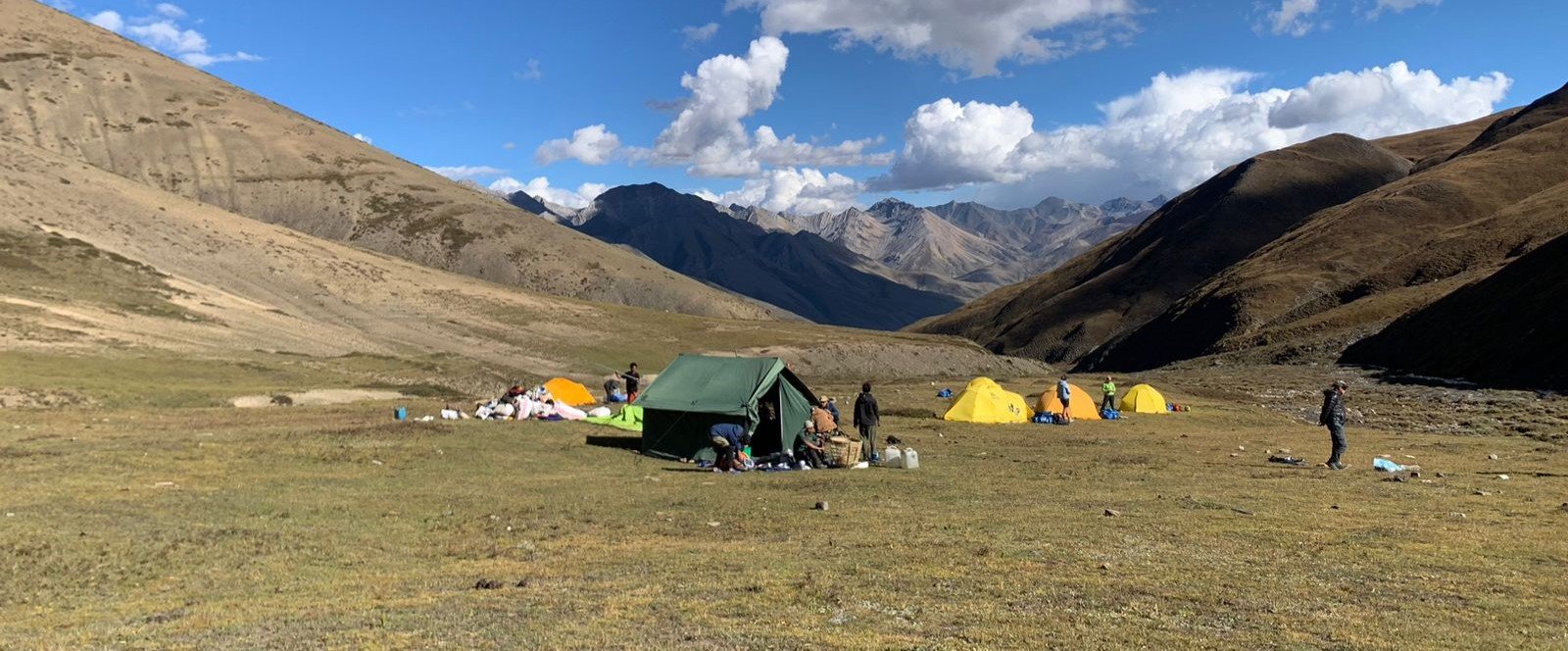
Day of rest and walk in the valley of Tarap, visit small Tibetan monasteries (there are no more monks in the monasteries) and Tibetan houses. Visit Buddhist and Bonpos monasteries. To complete our acclimatization, we climb up to 4,400m. We spend the night at the same camp, where a small part of the film “Himalaya, the childhood of a chef” was shot.
After a free morning in Dho, we leave at the foot of the Num La pass which we cross the next day.
We gradually climb up to the Num la pass at 5,185m. From up there, we dominate the entire Himalayan chain: Dhaulagiri I (8,167m), Churen Himal (7,310m), Tukuche Peak (6,920m), Annapurna massif, Damodar, Kanjiroba (6,612m), Kang Chune, Guras Himal, Norbu Kang (6,140m) and the Tibetan plateau to the north. After the pass, the descent is steep, sometimes on the screen until the torrent. After a small gradual climb and flat, we arrive at our bivouac, a very beautiful view of Norbu Kang.
We pass the Baga La pass (5,170m), and the mineral landscape is magnificent. The end of the descent is a bit steep.
The arrival on Lake Phogsumdo (3,800m) and the village of Ringmo (3,600m) is undoubtedly one of the most beautiful Himalayan panoramas. Beautiful forest of pines, firs, and birches around the lake.
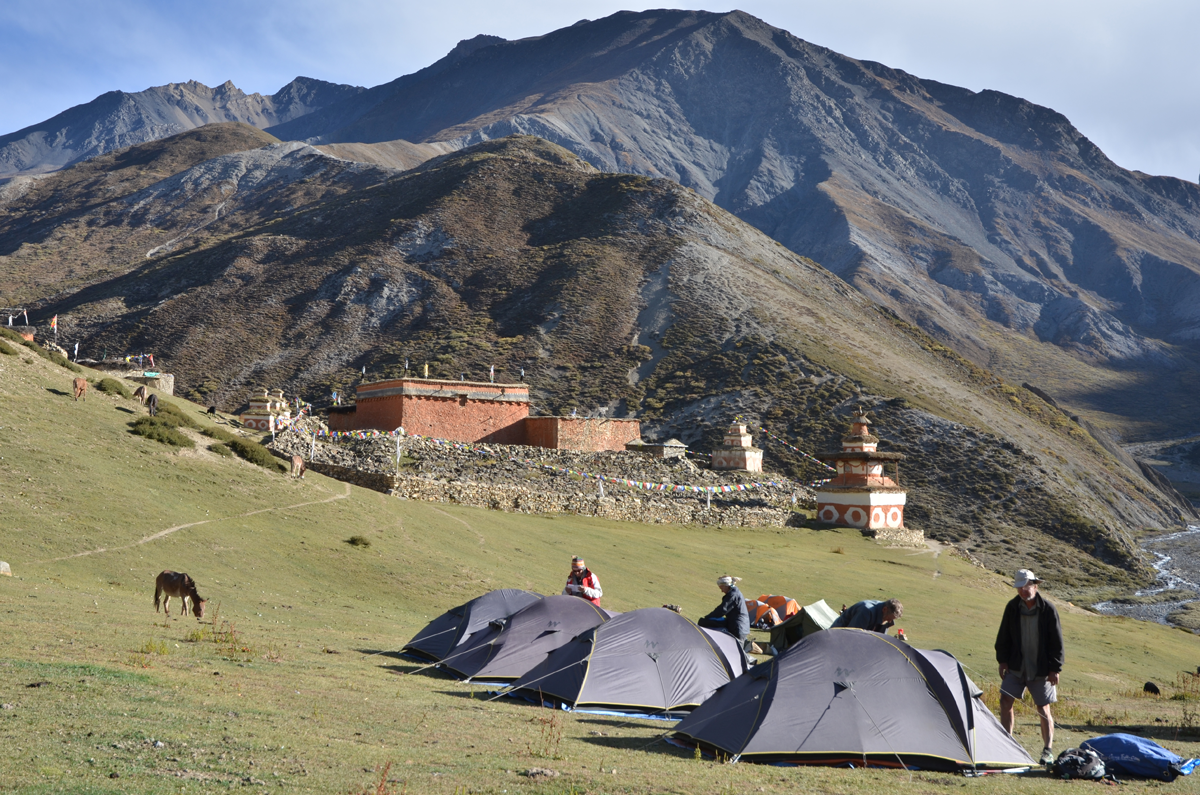
Day of a stroll around the lake and visit the Bönpo monastery of Ringmo in a splendid setting.
After passing an impressive waterfall more than 300m high, we radically change scenery and find the greenery when the path plunges into the gorges and the forest. It’s a long day of walking without difficulty.
Easy walk along the river but the trail is rough at times. We cross a village whose inhabitants seem straight out of a wonderful tale where time has stopped. Last climb to reach the beautiful village of Juphal where the terraces are connected by ladders cut into rough trunks.
Flight to Nepalgunj then flight to Kathmandu. Transfer to the hotel.
Safety day in Kathmandu, kept in reserve in case of delayed domestic flights. Free time to explore the city at your own pace.
Transfer to the airport. End of our services
Practical Info
– In Kathmandu, we use hotels of good category ***, well located in the centre of Kathmandu. – The stay in Kathmandu is always done in a B&B to give you your choice of restaurants that offer traditional and continental cuisine according to your choices. – During the trek, you will be on full board and accommodation according to the itinerary.
What is included
- All airport transfers by private vehicle.
- Full board trek in bivouac / Camping
- Collective camping and kitchen equipment (mess tent, toilet tent, kitchen tent and two-seater tents, tables and chairs, stove, gas, etc.)
- Special permits Lower Dolpo ($40) entrance to Phoksumdo & TIMS park ($40 US)
- 1 night at the Traveler's village hotel or similar in half board in Nepalganj
- 3 nights at the Holy Himalaya Hotel or similar in B&B
- Trekking guide for the entire trip
- Trekking team: cook, kitchen boys, Sherpa(s), mules or porters
- Insurance of the staff
- Domestic airport taxes
What is not included
- Meals in Kathmandu excluding breakfast
- International flights & domestic flights are indicated separately
- Nepal Visa ($50 and photos for 30 days) but recommend to do in advance
- Mandatory personal repatriation insurance (5000 USD coverage including covid). PCR test…
- Personal expenses, tips, drinks, sleeping bags, etc.
FAQ
The beating heart of Lower Dolpo, the Tarap valley is a haven of life suspended between sky and earth. Its Tibetan hamlets, terraced barley fields, ancient monasteries and herds of yaks make it an unforgettable immersion in a rural, unspoilt Nepal. Further on, Phoksumdo lake reveals its legendary turquoise colour in a hollow of rock. Considered one of the most beautiful high-altitude lakes in the world, it fascinates with its purity and sacred atmosphere. Together, Tarap and Phoksumdo are among the most captivating jewels of the Nepal Himalaya.
Lower Dolpo is a land of rare authenticity. With no roads, no network and no mass tourism, this mountainous region has remained true to its traditions and ancestral rhythm. Far from the busy trails of Annapurna or Everest, you will live a timeless adventure among raw nature, remote villages and high passes. Here, the Himalaya reveals itself in all its power and solitude. Every step is a rediscovery of nature, every silence a deep connection with the environment.
Throughout the trek, Bon temples and Buddhist monasteries punctuate the stages like spiritual guardians of the valley. Gongs ring out at dawn, prayer wheels turn slowly in the hands of villagers and multicoloured flags flap in the wind. Far more than a simple hike, this journey is also an inner walk, combining Tibetan spirituality, contemplation of vast landscapes and respect for age-old customs that are still very much alive.
This legendary Lower Dolpo trek partly follows the ancient salt trade routes once used by yak caravans between Tibet and the Nepalese valleys. Today, these trails still echo with this thousand-year-old history, brought to the screen by the film “Himalaya” (“Caravan”), shot in the region. Walking here, you relive the film’s moving scenes and touch the soul of Dolpo, between shamanic rituals, oral traditions and the transmission of ancient knowledge.

