Lobuche east and Island peak expedition
2 600,00 €
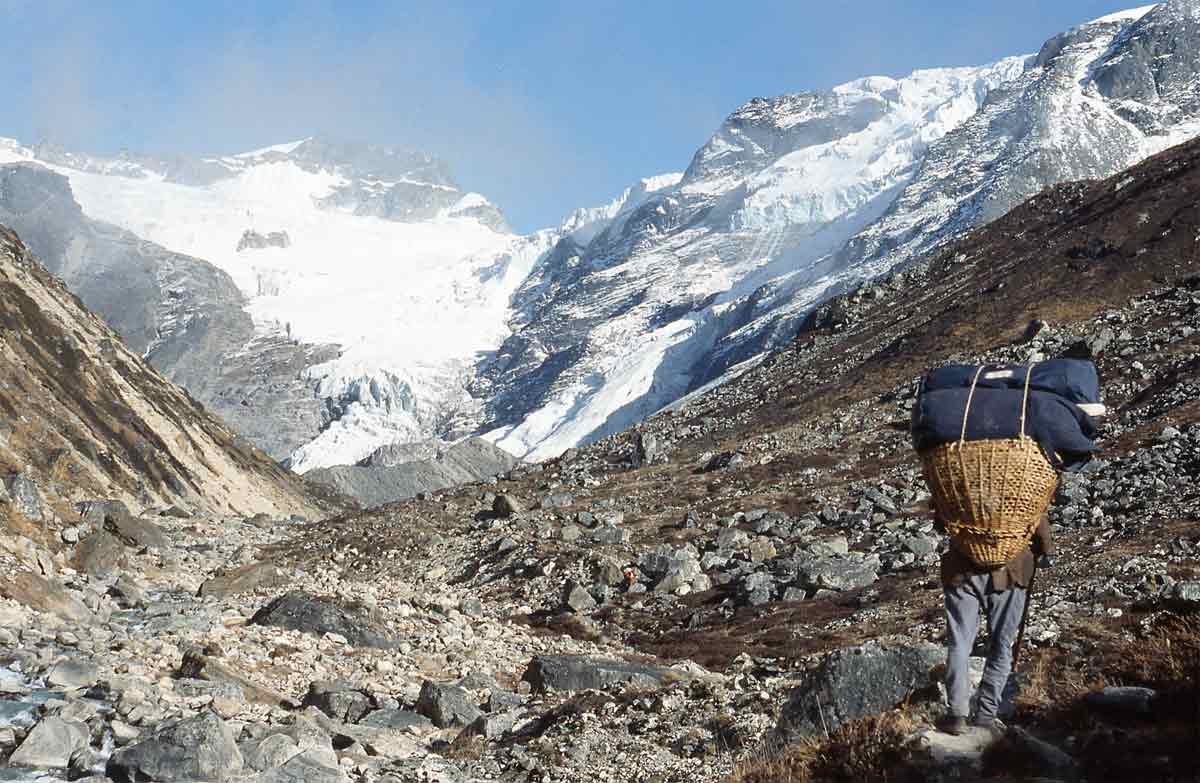
Climbing two peaks is surely reason enough for excitement. Both over 6000m, Lobuche East and Island Peak are in eastern Nepal and the trek to these peaks leads through two high passes and Kala Patthar, the latter arguably the best viewpoint to see the mighty Everest range.
This expedition consists of not one but two climbs that present little technical difficulty and the crossing of two high passes. At first, we go up the Dudh Khosi, a river that has its source in the Gokyo lakes. The lakes are seen from the viewpoint of Gokyo Ri. After crossing the Cho La pass we head up towards Kala Patthar. We then embark on our first climb to the summit of Lobuche East (6,145 m), slightly more technical than Island Peak (a.k.a. Imja Tse at 6,189m), which we climb after crossing the second pass, Kongma La. We then descend from the valley of Imja Khola. On the way, we have a cultural moment as we visit the monasteries of Tengboche and Namche.
Besides the technical aspect of climbing that the guide will teach beginners, crossing passes above 5,500m can be stressful. Hence climbers are required to be in excellent physical condition.
- Nepal Country
- Trekking and expeditions Thématique
- Very difficult Difficulté
- 24 days Duration
- 6 189 m Max. altitude
- Yes Guide
- Camping, Hôtel, Lodge Hébergement
- Kathmandu Departure / Arrival
- Kathmandu – Lukla – Kathmandu Domestic flights
Itinerary
Airport pick-up, transfer to hotel and check-in.
Free day in the capital city.
The early morning flight from Kathmandu to Lukla is an opportunity to get a panoramic view of the Eastern Himalayas: Langtang, Gauri Shankar, Numbur, Manglungtse, and finally Everest on this 45-minutes flight. In Lukla (2,700 m.), our Sherpas join us with all the equipment. The trek begins with a short descent to the Dudh Koshi Valley. From the village of Chaurikharka (2,621m) the trail leads to the north through Sherpa villages where wheat, potatoes, corn and vegetables are grown. We cross a wooden suspension bridge to get to the other side of the Dudh Koshi River.
This day begins with a walk along the Dudh Koshi River. The path climbs gently as we cross the river on several occasions. Then we come across the village of Jorsale (2,805 m.) and start a steep ascent to Namche Bazar. Half an hour later, Everest comes into view. We arrive in Namche early enough to find time to walk around this famous Sherpa settlement and meet the inhabitants. Some Tibetan shopkeepers and hawkers sell jewelry and handicrafts from Tibet. Once a week an open market springs up in Namche, where the farmers from the region sell their crops like wheat, maize, millet, etc.
Day of acclimatization and rest in Namche (3,440 m).
We climb up above Namche Bazaar along a gentle slope on the mountainside to the Mong Pass. We enjoy views of Ama Dablam and Kantega, two of the spectacular peaks of Nepal. We then descend to Phortse Tenga (3,600 m) along the Dudh Koshi (Milky River) and ascend lightly to the village of Phortse (3,800 m.). This day is for acclimatization to the high altitude.
We climb straight up through rhododendrons and juniper trees, followed by conifers. We walk through the mountain pasture villages of Tongba (3,690 m.), Gyele (3,960 m.), and Lhabarma (4,220 m.). There are views of two peaks, Khumbila and Taboche all day long.
We climb up steadily and get a fascinating view of Cho Oyu (8,135 m), a fortress of snow and ice. We pass close to Pangka at 4,390m and begin the descent to the river before climbing the last moraine of the Ngozumpa Glacier. We come upon the first lake located at 4,720 m. and a second lake at 4,690 m. We finally reach Gokyo Lake (4,750m). Gokyo is a pasture for yaks, and there are only seven huts here.
Climb up to the small summit above the lake, and you get the most beautiful panoramic view of the Everest region. Getting to the top of this peak is quite easy taking about 2 hours to climb. From the top, the view is unforgettable. The most amazing line up of the highest peaks on earth, all clearly visible: Cho Oyu, Makalu, Lhotse, Everest, Cholatse and Taboche. We then descend to Thagnak (4,700 m).
An early morning start gets us to the top of Cho La Pass well in time. It takes 5 hours and the going is a little difficult. But the rewards are great: Superb views of Everest, Ama Dablam, East and West Lobuche and Pumori, etc. After admiring the views, we descend to Dzong La.
This day’s hike is easy and in the end, we reach Lobuche.
Today we walk along the Khumbu Glacier and the climb is relatively easy up to Gorak Shep. Get settled in the lodge and head out in the afternoon for an optional excursion to the Everest Base Camp and back.
To enjoy great views we leave early in the morning and make a steep ascent to Kala Patthar. We find ourselves at the heart of a huge amphitheater surrounded by the highest and most popular summits of the world. We then head down to the Lobuche Base Camp where we will prepare for the expedition.
Pre-dawn start for the ascent of Lobuche East with the high-mountain guide: roped climbing on the summit ridge, views of Everest, Lhotse and Ama Dablam, then back to base camp for the night under canvas.
Reserve day in case of bad summit weather; otherwise rest, then return to Lobuche for the night in a lodge.
This day we do the longest hike of our trek as we must cross the difficult pass of Kongma La.
We walk along the moraine and the icy lakes of Chokarma Tso and Imja Tso. Then, we slowly make our way up to the Island Peak Base Camp where we pitch our tent and prepare for the ascent.
Safety day for the ascent. Then, return to Chukhung.
We head back down through Pangboche where one finds the oldest gompas of Nepal. We go through forests and pass through villages and descend to Tengboche, the spiritual heart of Khumbu. We then visit the famous Tengboche monastery which was once destroyed by fire. The picturesque site has Ama Dablam as a backdrop.
We make a great descent to the Dudh Koshi (Milky River) and climb up to Sanasa before we stop for lunch at Namche. In the afternoon after lunch, we descend to Monjo where we spend the night.
We cross the Gumila forest and hike all the way to Lukla.
Catch the morning flight to Kathmandu. In clear weather, the view of the Himalayan range is mesmerizing. Transfer to the hotel.
Safety day.
Transfer to TIA (Kathmandu Airport) for your return flight. End of our services.
Practical Info
USEFUL INFORMATION: Difficulty: Alpine grade: little difficult – slope less than 40° Snow race without great technical difficulty – requires knowledge and practice of roped walking, with crampons and ice axe The best time for climbing is in October. The second choice is in March – April, but there is always a risk of avalanches during that time. Materials that you should have: For trekking – trekking shoes: high stems and waterproof. Choose quite rigid shoes with non-slip soles and crampons. – light shoes (tennis) or sandals to put on during the stages in town, village, or while camping at night. – a pair of flip flops – pairs of walking and mountain socks – 2 trekking pants – underwear. (Fine technical fibers such as Carline or Polartec fibers) – 1 or 2 breathable Carline shirt and T-shirts – 1 fleece jacket. It is warm, light and dries quickly) – 1 mountain jacket (like Goretex or Micropore) – A quilted jacket is a must – Rain cape – gloves or fingerless gloves – hat – Sunhat – good sunglasses Equipment: – a sleeping bag (- 20° C): Warm, comfortable, fit to your size, sarcophagus-shape (closer to the body with a closing hood) – sun cream (face and lips) – headlamp, with spare batteries and bulbs – light water bottle – 2 liters minimum and isothermal – pocket knife, better if multipurpose – toilet paper – lighter Climbing equipment to prove (or to rent in Kathmandu): 1. Ice ax 2. Crampons 3. Gaiter 4. Helmet (optional) 5. Harness with short rope 6. Carabiners (2 + 2) 7. Mountain shoes Materials supplied by our agenc y : – Tents – Ropes – Mattress – Fixed ropes – Ice picks – Hammer – Snow anchor – All camping equipment and trekking kitchen
What is included
- 4 airport transfers by private vehicles
- Compulsory guide insurance (2 x 250 US $ / guide and sherpa)
- Ascent bonus (2 x 340 US $ / guide and sherpa)
- English-speaking guide for the entire trek and the two flights
- Trekking team: 1 porter for 2 people (carrying baggage up to 13 kg/people) & extra-porter for the personal ascent material.
- 1 Sherpa for a group of 4 or more
- 3 nights in bivouac at the base camp with a local cook
- Trekking permit for Sagarmatha national park & Khumbu villages community taxes
- Collective ascent material
- 4 nights in Kantipur Temple House Hotel or similar on a B&B basis
- Full board in lodge & bivouac, as per itinerary
What is not included
- Meals in Kathmandu excluding breakfast
- Flights Kathmandu – Lukla – Kathmandu
- Royalties for Island Peak & Lobuche Peak in the springtime (500 US $ / participant)
- Personal ascent material
- Extra luggage in domestic flight beyond 15 kg (about 1 $ / kg to pay on-site)
- Visa for Nepal (50$ + Photos)
- International flight
- Compulsory repatriation insurance
- Tips, personal expenses and equipment, drinks, hot showers, charging batteries during the treks, etc.
FAQ
This exceptional journey offers the rare chance to climb two Nepalese “trekking peaks” without being a seasoned mountaineer. The Lobuche East ascent (6,145 m) and Island Peak (6,189 m) are among the finest accessible summits in Nepal. With a high-mountain guide, you will learn to use an ice axe, crampons and ropes safely. The technical coaching is designed for motivated beginners who already have experience of trekking at altitude. A physical but achievable challenge, rewarded by breathtaking views of the Himalayan giants.
To maximise your chances of success and minimise altitude risks, this itinerary has been designed for gentle, well-planned acclimatisation. The ascents of Gokyo Ri (5,360 m) and Kala Patthar (5,545 m), along with the Cho La (5,300 m) and Kongma La (5,535 m) passes, punctuate the route and allow the body to adapt effectively to high altitude. These secondary summits also offer spectacular panoramas, ideal for preparing mentally and physically for the 6,000 m climbs.
More than a sporting challenge, this expedition is also a journey of exploration into the legendary world of the Khumbu, homeland of the Sherpa people. You will walk beneath Lhotse, Makalu, Cho Oyu and, of course, Everest, the roof of the world. This challenging trek takes you to the heart of the most majestic Himalaya, where peaks exceed 7,000 and 8,000 metres and every valley reveals a new face of the Nepalese high mountains.
This circuit is not only about effort and performance: it also includes strong cultural stages, notably a visit to Tengboche monastery, a major centre of Himalayan Buddhism. In Namche Bazaar, the Sherpa capital, you will discover the close link between spirituality and daily life at altitude. The warmth of the locals, their religious devotion and the wisdom of the monks enrich the adventure, making it a deeply human journey in step with the mountains and local traditions.

